





Register Now
Fill out this form to get a quote within 24 hours.


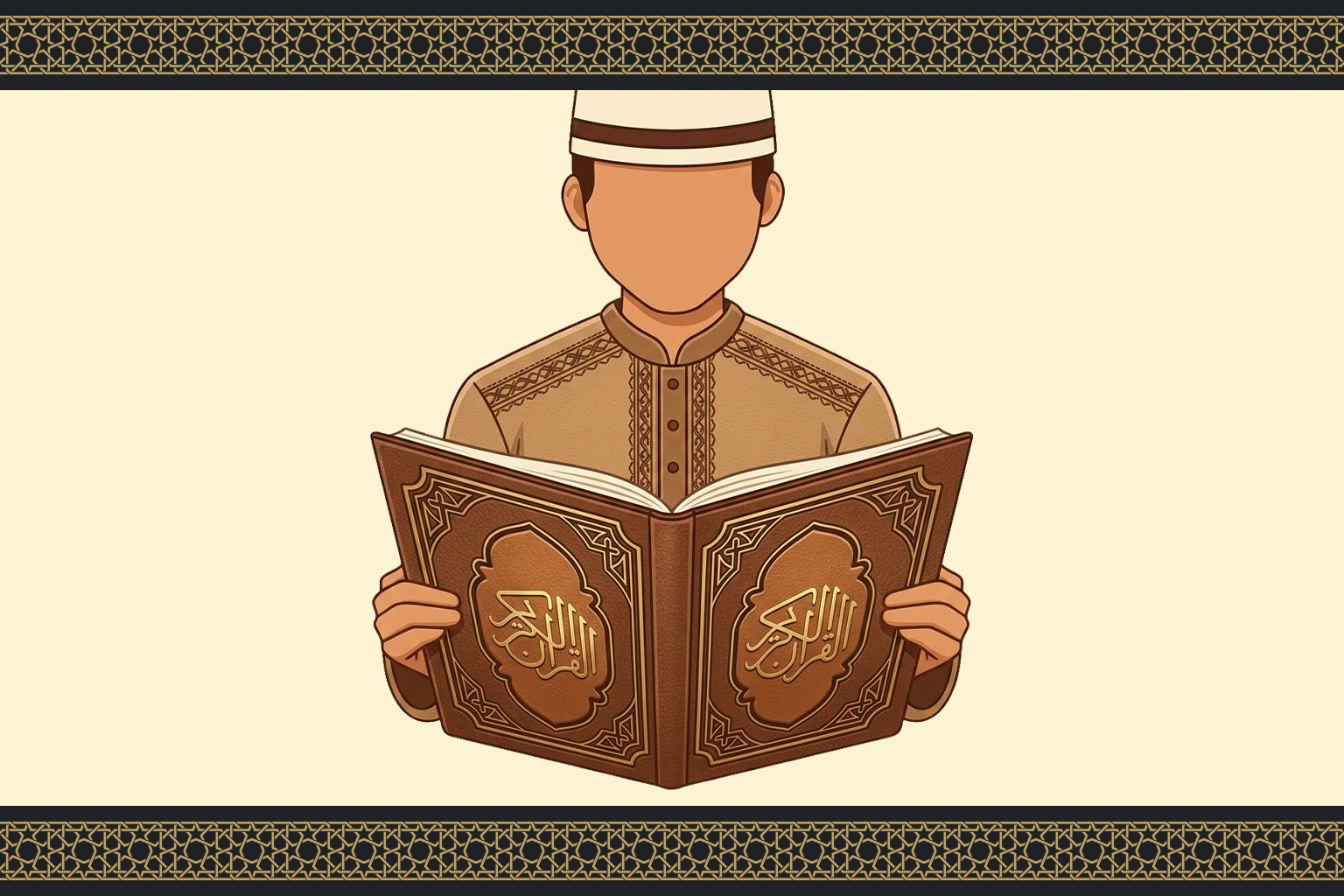
In the modern era, it is harder to stay focused on a single thing. Our attention is constantly being pulled by the world around us. We live in a fast-paced world where people are getting distracted with busy schedules, non-stop notifications, and the constant pressure to achieve more.
Among all this chaos, people often feel empty and emotionally drained. They search for a sense of grounding, a source of truth that doesn’t shift with the trends of the day.
The Quran stands as that eternal anchor. For Muslims, it is not merely a book of historical accounts or a list of “dos and don’ts.” It is the Kalamullah, “the literal Word of Allah”, described as a “healing and a mercy” for the believers.
However, many of us feel a disconnect with our Holybook. Perhaps we weren’t taught properly as children, or perhaps the “rusty” state of our Arabic makes us feel like the Book is inaccessible.
Learning the Quran with Tajweed and understanding its message is the key to building a deeper connection with it. It is a journey that transforms the way you think, speak, and pray. This guide is designed to take you from the basics of the “beginner’s mind” to the practical habits of a lifelong student.
We pray Salah to stand before Allah, share our gratitude and worries, and strengthen our connection with Him. The importance of Sajdah in the Quran reminds us that in the state of Sajda, Muslims are closest to their Creator. That is why making dua in Sajda is highly encouraged.
Like Salah, learning to read the Quran is also necessary to understand Allah’s commands and guidance. The Quran is the holy book of Muslims, and unlike any other book, the connection a believer has with it is truly unique.
Learning the Quran as an adult is fundamentally different from learning it as a child. A child’s brain is a sponge; an adult’s brain is a map that has already been drawn. When you try to produce sounds like the deep “Haa” (ح) or the heavy “Dhad” (ض), your vocal cords might resist.
You may feel a sense of embarrassment or frustration when you can’t get it right even after several attempts. This is where renewing your intention becomes a survival tool. You aren’t just learning a language; you are building a connection with the one who created you.
When you feel frustrated, remind yourself: “I am doing this for the sake of Allah.” This shift in mindset turns a difficult study session into a rewarded act of worship.
We must internalize the famous Hadith:
“The one who is proficient in the Quran is with the noble angels, but the one who struggles and stutters while reciting receives two rewards”.
One reward for the recitation itself, and a second, special reward for the effort and the struggle. Allah does not demand perfection. He demands sincerity and persistence.
Many students fail because they try to run before they can crawl. They want to recite “Surah Al-Baqarah” with the flow of a professional Qari within a month. This approach leads to burnout.
The Power of the Alphabet
The Arabic script is a masterpiece of logic and beauty. Unlike English, where “C” can sound like “S” or “K,” Arabic is sound-based. Once you learn the rules, the word is pronounced exactly as it is written.
To learn the Quran as a beginner, your first milestone should be the Noorani Qaida. This isn’t just for children. It is the “blueprint” of the Quran. It teaches you:
Take your time here. If you spend a month just mastering the 28 letters, you have built a foundation that will support you for the next fifty years.
There is a dangerous psychological barrier that often stops people from picking up the Quran: the fear of “doing it wrong” and committing a sin.
It is a common myth that reciting with mistakes is Haram. While we should never be careless with the Word of Allah, the scholars agree that for a student in the process of learning, mistakes are inevitable and forgiven.
Allah tells us in the Quran: “So fear Allah as much as you are able…” (64:16). He does not ask us for more than our capacity. If you stay silent out of fear, you lose the opportunity to improve.
The only “wrong” way to approach the Quran is to leave it on the shelf gathering dust. Embrace the “clumsiness” of your early days. Each mistake is simply a signpost telling you where to focus your next practice session.
The greatest enemy of Quranic study is the “all-or-nothing” mentality. We wait for a perfect time to learn the Quran. A weekend with no house chores or a holiday to study, and honestly, that time rarely comes.
Spiritual growth is built on the Sunnah of consistency. The Prophet (saws) said: “The most beloved of deeds to Allah are those that are most consistent, even if they are small.”
Instead of aiming for an hour of study, aim for 15 minutes every day.
Learning the Quran shouldn’t be a one-sided activity where you just look at a page. To truly “own” the knowledge, you must engage multiple senses.
Keep a dedicated journal for your Quran journey.
Before the Quran was a written book, it was an oral revelation. The companions of the Prophet Muhammad (SWT) learned it by listening.
In our digital age, we have access to the greatest reciters in history at the touch of a button.
Tajweed is often misunderstood as just “accent,” but it is actually a precise science. The word comes from the root j-w-d, meaning “to make better” or “to beautify.”
Arabic is a sensitive language. A slight change in the length of a vowel or the “heaviness” of a letter can completely change the meaning of a word. For example, the difference between “heart” (Qalb) and “dog” (Kalb) is just the difference between a deep “Q” and a light “K.”
Tajweed protects the Quran from being distorted. It involves:
By learning the Quran with tajweed, you aren’t just being correct. You are uncovering the hidden beauty that has moved people to tears for 1,400 years.
While self-study is great for starting, there comes a point where you need a mirror. A teacher acts as a mirror, reflecting your mistakes and helping you grow in your Quran learning journey.
We live in the golden age of online Quran learning in the USA, where access to good teachers has become easier. You no longer need to live near a mosque to find a scholar.
The ultimate “final exam” of your Quranic study is your daily Salah (prayer). This is where your hard work pays off.
Most of us recite the same two or three surahs in every prayer out of habit. When you learn a new verse or a new Tajweed rule, try to use it in your next prayer.
Learning the Quran is not a destination. You don’t “finish” the Quran and put it away. It is a life companion. There will be days when you feel highly motivated, and sometimes you feel distant. The goal is to never stop learning, no matter how slow the pace.
Every minute you spend struggling with a letter, and every morning you choose the Quran over your phone, you are building a strong connection with Allah. You are becoming a person who lives according to Allah’s commands and the teachings of His messenger. This helps Muslims develop their character and brings peace to their hearts.
