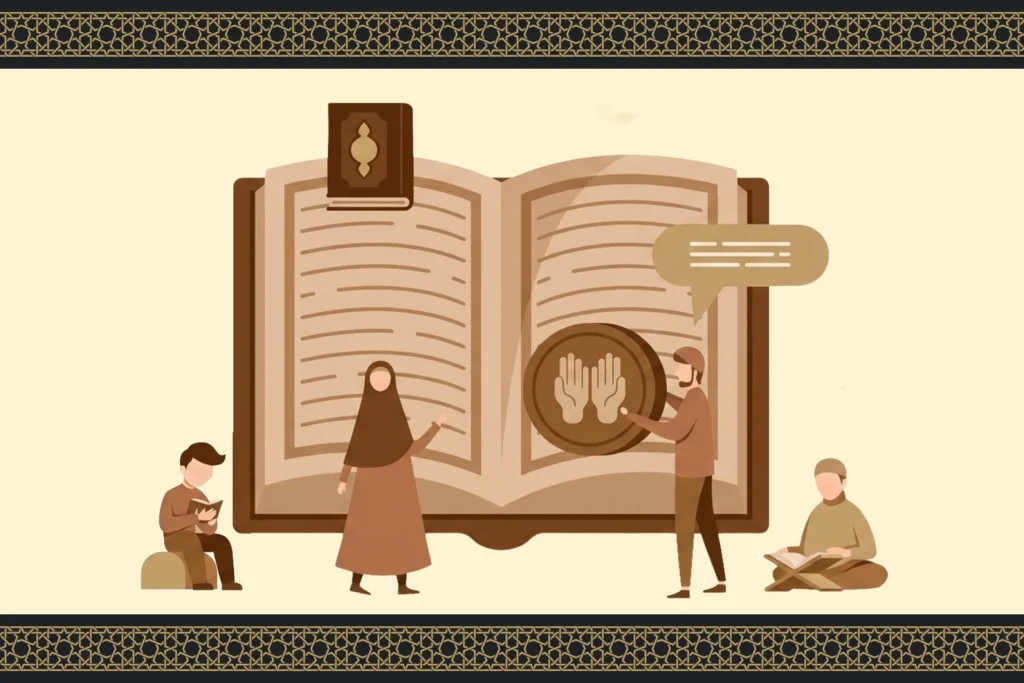
Most Muslim parents living in the West share the same worry: their children are growing up surrounded by influences that don’t reflect Islamic values, and the window to build a strong foundation is closing faster than they expected.
Sunday school at the masjid covers some basics. Conversations at home help. But a structured Islamic studies program — one that teaches your child why Muslims believe what they believe, how to practice Islam correctly, and who the Prophet ﷺ was as a real person — is what turns surface-level identity into rooted faith.
This is what Islamic studies for kids actually covers, why each subject matters, and how to get started.
What Islamic Studies for Kids Includes
A proper Islamic studies curriculum isn’t one subject — it’s six, each building on the others:
1. Aqeedah — What Muslims Believe
Aqeedah is the foundation everything else stands on. Before your child learns how to pray, they need to understand who they’re praying to and why.
Aqeedah covers the six pillars of Iman: belief in Allah (His oneness, His names, His attributes), belief in the Angels (their roles, their nature), belief in the revealed Books (Torah, Psalms, Gospel, and the Quran as the final, preserved revelation), belief in the Prophets and Messengers (from Adam to Muhammad ﷺ), belief in the Day of Judgment (accountability, justice, the afterlife), and belief in Qadr (that Allah’s knowledge encompasses everything — past, present, and future).
Why it matters for kids: A child who understands Aqeedah doesn’t just follow rules — they understand the reasoning behind every act of worship. When a classmate asks “Why do you pray?”, your child has an answer that comes from understanding, not just habit.
2. Fiqh — How to Practice Islam Correctly
Fiqh is the practical side — the rules that govern daily Muslim life. For kids, this starts with the acts of worship they’ll perform:
How to make Wudu properly (the steps, what breaks it, common mistakes). How to pray Salah correctly (movements, words, timing of each prayer, what invalidates it). The basics of fasting — what Sawm means, why Muslims fast in Ramadan, and at what age fasting begins. The concept of Zakah — why Muslims give a portion of their wealth, who receives it, and what it teaches about generosity. An introduction to Hajj — what it is, why it matters, and the story of Prophet Ibrahim (AS) behind it.
Why it matters for kids: Without Fiqh, a child might pray five times a day but not know that talking during Salah invalidates it, or that Wudu must be done in a specific order. Fiqh turns ritual into correct worship.
→ Learn Salah Course — detailed prayer instruction
3. Seerah — The Life of Prophet Muhammad ﷺ
Seerah isn’t a history lecture — it’s the story of the most influential human being who ever lived, told through events that children can relate to.
The Prophet ﷺ as an orphan who grew up with kindness and integrity. His honesty as a young man (Al-Amin — “the trustworthy”). The first revelation in the Cave of Hira. The early Muslims who were persecuted for their faith and never gave up. The Hijra to Madinah — leaving home for the sake of Allah. How he treated children, neighbors, animals, and even his enemies with mercy.
Why it matters for kids: Every child needs role models. The Prophet ﷺ is the ultimate role model in Islam, but he can’t be a role model for your child if your child doesn’t know his story. Seerah makes him real — not a distant historical figure, but someone whose character your child wants to emulate.
4. Hadith — The Prophet’s Words and Actions
Hadith takes Seerah deeper. While Seerah tells the story, Hadith teaches the specific sayings and practices of the Prophet ﷺ that guide daily life:
“The best among you are those who are best to their families.” “Smiling at your brother is an act of charity.” “None of you truly believes until he loves for his brother what he loves for himself.”
Children learn selected Hadith that are age-appropriate, easy to understand, and directly applicable to their behavior at home, at school, and with friends.
Why it matters for kids: Hadith gives your child concrete guidance for real situations. When they’re tempted to lie, they remember the Prophet ﷺ valued honesty above everything. When they see someone being bullied, they remember that helping others is an act of worship.
5. Duas — Daily Supplications
Duas are the short prayers Muslims recite throughout the day — before eating, after eating, before sleeping, when waking up, when entering the bathroom, when leaving the house, when it rains, when seeing something beautiful.
Children memorize these Duas in Arabic with their meanings, so they understand what they’re saying, not just repeating sounds.
Why it matters for kids: Duas turn ordinary moments into acts of worship. A child who says Bismillah before eating isn’t just following a rule — they’re acknowledging that the food came from Allah. This consciousness, repeated dozens of times daily, builds a child who naturally thinks about Allah throughout their day.
6. Akhlaq — Islamic Character and Manners
Akhlaq is the study of character — how a Muslim should behave toward parents, siblings, teachers, friends, neighbors, animals, and the environment.
Honesty even when it’s difficult. Patience when things don’t go your way. Kindness to everyone, not just people who are kind to you. Respect for parents and elders. Generosity with your time, your possessions, and your words. Controlling anger and forgiving others.
Why it matters for kids: Islam isn’t just about prayer and fasting — it’s about how you treat people. A child who prays five times a day but lies, bullies others, or disrespects their parents has missed the point. Akhlaq connects worship to behavior.
When Should Kids Start Islamic Studies?
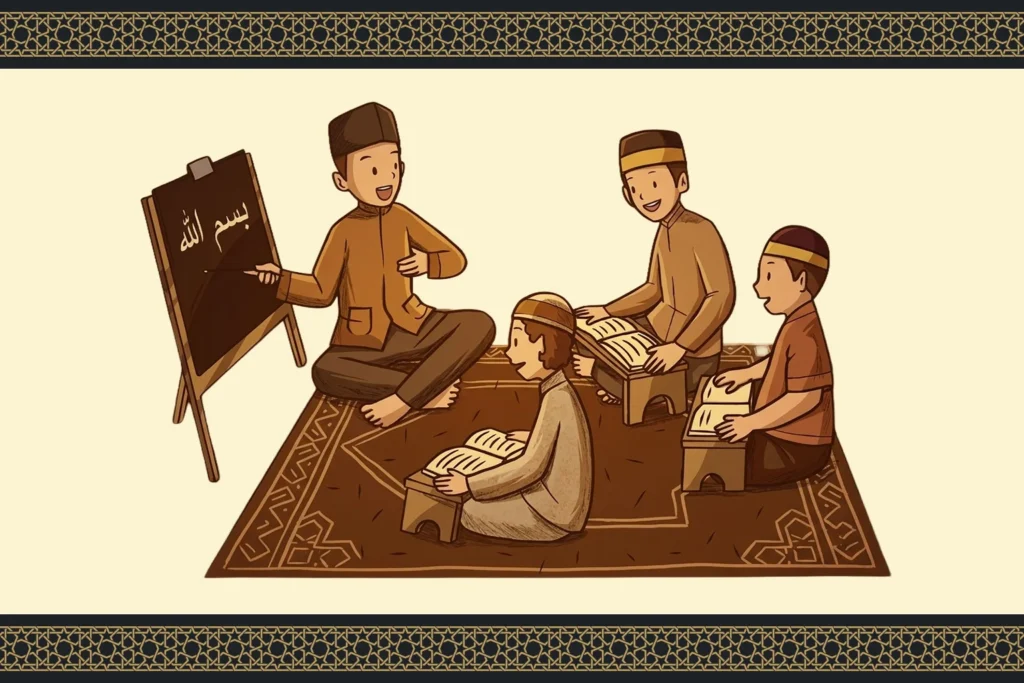
Ages 4–6: Start with the basics — Allah is our Creator, the Prophet ﷺ is our role model, short Duas for daily life, and simple stories from Seerah. Keep sessions short (15–20 minutes) and story-based.
Ages 7–10: This is the strongest window. Children can now understand concepts like the Day of Judgment, the logic behind Fiqh rules, and the historical context of Seerah. Formal Islamic studies classes work well at this age with 30-minute sessions, 2–3 times per week.
Ages 11–14: Pre-teens and teens need why, not just what. They’ll encounter questions from non-Muslim classmates, see contradictions between Islamic values and popular culture, and start forming their own identity. Islamic studies at this age should encourage questions, not shut them down.
Any age is a valid starting point. A 12-year-old who never had Islamic studies isn’t behind — they just start at a level that matches their current knowledge and move quickly through the basics.
How Online Islamic Studies Classes Work
Your child joins a live 1-on-1 video session with a qualified Islamic studies teacher. Each session covers one subject area — Aqeedah one day, Fiqh the next, Seerah the following week — in a structured curriculum that builds progressively.
What makes 1-on-1 better than group classes: Your child can ask questions without embarrassment, the teacher adapts the pace to your child’s comprehension level, and there’s no sitting idle while 15 other kids take turns answering. Every minute of a 30-minute session is spent on your child’s learning.
What makes online better than self-study: A child reading an Islamic studies book at home has no one to answer their questions, correct their misunderstandings, or connect the material to their real life. A teacher does all three.
The curriculum connects naturally with Quran learning — a child studying the story of Prophet Musa (AS) in Seerah can read the same story in the Quran during their Quran Reading class. A child learning about Salah in Fiqh can practice the actual recitations in their Learn Salah course. The subjects reinforce each other.
What Parents Tell Us
The most common feedback from parents: “My child is asking questions about Islam at dinner now.” That’s the sign it’s working — when Islamic knowledge moves from the classroom into your child’s everyday thinking.
The second most common: “I’m learning things I didn’t know myself.” Many parents discover gaps in their own Islamic knowledge through their child’s course. That’s not a failure — it’s an opportunity. Some parents enroll alongside their child in a separate class.
Get Started With 3 Free Trial Classes
Your child meets their teacher, experiences a real lesson, and you see exactly how the curriculum works — before you pay anything.
In the trial sessions, the teacher assesses your child’s current Islamic knowledge (no judgment — many children start with very little), shows you the curriculum structure and what your child will cover over the coming months, and lets your child experience the teaching style so you can both decide if it’s a fit.
3 full sessions. No credit card. No obligation.
Recommended plan: Starter — 2 classes/week ($30/month) for ages 4–7 or Standard — 3 classes/week ($40/month) for ages 7+.
→ Islamic Course for Beginners — full course details
→ Five Pillars of Islam Course
FAQs
What does Islamic studies for kids cover? A complete curriculum covers six subjects: Aqeedah (core beliefs), Fiqh (how to practice Islam — Wudu, Salah, fasting, Zakah), Seerah (life of Prophet Muhammad ﷺ), Hadith (the Prophet’s sayings and actions), Duas (daily supplications with meanings), and Akhlaq (Islamic character and manners).
What age should my child start Islamic studies? Children can start with simple concepts (Allah is our Creator, basic Duas, short Prophet stories) as early as age 4–5. Structured classes with a curriculum work best from age 7 onward. There’s no upper age limit — teens and even adults benefit from formal Islamic education.
Is this different from Quran classes? Yes. Quran classes focus on reading, recitation, Tajweed, and memorization of the Quran text. Islamic studies covers the broader knowledge — beliefs, worship rules, Prophet’s life, character development, and daily Duas. Many families enroll their child in both, as the subjects complement each other.
Can my child take Islamic studies without knowing Arabic? Absolutely. Islamic studies is taught in English (or Urdu, depending on teacher preference). Arabic Duas and terms are taught with their meanings and transliterations so your child understands what they’re saying.
How many classes per week does my child need? Two to three classes per week is ideal. This provides enough frequency to build knowledge progressively without overwhelming your child alongside their school schedule.
Do you have female teachers for girls? Yes. Qualified female Islamic studies teachers are available for families who prefer their daughter learns from a woman.
How long does the Islamic studies course take? The beginner course typically spans 3–6 months covering foundational topics. The full curriculum, which deepens into advanced Fiqh, detailed Seerah, and Hadith study, can continue for 1–2 years depending on the child’s pace and how many sessions they take per week.
How much do online Islamic studies classes cost? The same plans apply to all courses: $30/month for 2 classes per week, $40/month for 3, $45/month for 4, or $55/month for 5. Every plan starts with 3 free trial classes. See full pricing →