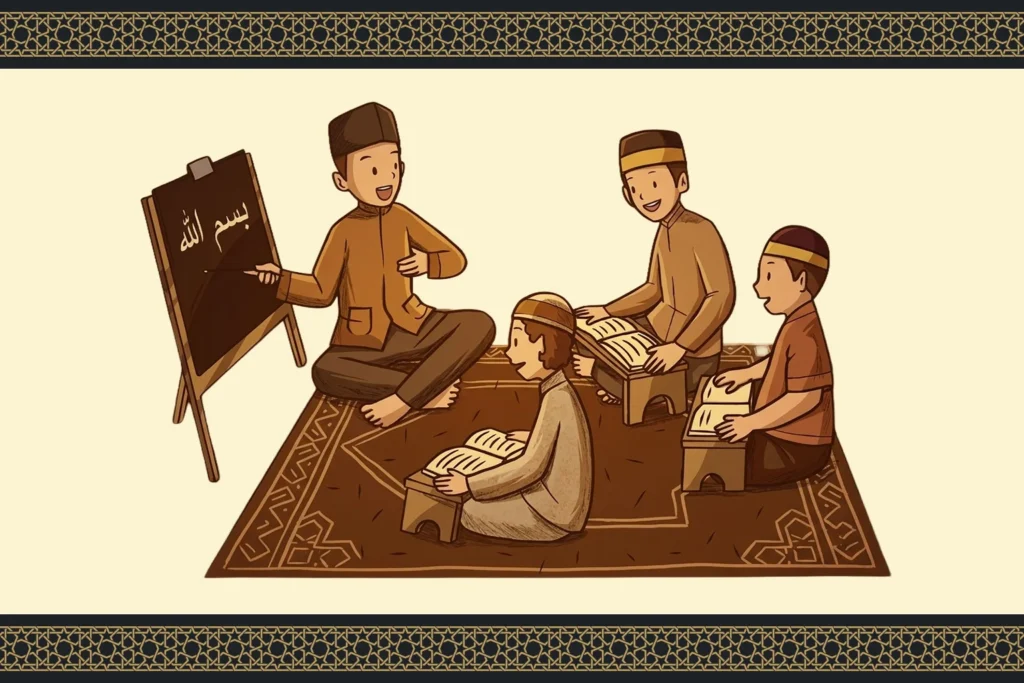
Memorizing the Quran — becoming a Hafiz or Hafiza — is one of the highest goals a Muslim can pursue. The Prophet ﷺ said: “The best among you are those who learn the Quran and teach it” (Sahih al-Bukhari). And the reward extends beyond the one who memorizes — parents who support their child’s Hifz journey are promised honor on the Day of Judgment.
But between the intention and the completion lies the real question: how?
How do you memorize 604 pages, 6,236 verses, and 77,000+ words of Arabic — especially if Arabic isn’t your first language?
This guide covers the exact methods that Hifz students and teachers use, realistic timelines, daily schedules, and practical solutions for the challenges you’ll face along the way.
Before You Begin: Two Things That Determine Your Success
1. Fix Your Intention
Hifz is worship, not an academic exercise. If your motivation is status, praise, or competing with other families, the journey will feel like a burden. If your intention is to please Allah and carry His words in your heart, He makes the path easier.
Allah says in Surah Al-Qamar (54:17): “And We have certainly made the Quran easy for remembrance. So is there any who will remember?”
This ayah is a promise — not a metaphor. When the intention is sincere, the memorization comes with barakah that you can’t explain logically. Students who should take months finish in weeks. Verses that seemed impossible suddenly click after Fajr.
Start every memorization session with a quiet moment of intention: this is for Allah alone.
2. You Need a Teacher — Not Just a Method
You can memorize on your own. But you’ll memorize wrong. You’ll miss pronunciation errors that become permanent. You’ll skip revision when it’s uncomfortable. You’ll lose motivation in month three when the initial excitement fades.
A Hifz teacher does four things you cannot do for yourself: they correct your Tajweed in real time so you memorize the correct pronunciation from day one, they hold you accountable to a daily schedule when your willpower runs out, they diagnose which verses are weakening in your memory before you notice, and they adjust your pace based on how your retention is actually performing — not how you think it’s performing.
This is why every successful Hafiz learned with a teacher, not from YouTube.
The Sabaq-Sabqi-Manzil System: How Hifz Actually Works
Most people think Hifz is about memorizing new verses every day. It’s not. Hifz is 20% new memorization and 80% revision. The system that makes this work has been used in Islamic institutions for centuries:
Sabaq (New Lesson) — the new portion you memorize today. For most students, this is 3–10 lines depending on level and capacity. You read it repeatedly, close the Mushaf, recite from memory, correct mistakes, and repeat until it’s solid.
Sabqi (Recent Revision) — the verses you memorized in the last 7–20 days. These are still fresh but fragile. If you don’t revise them daily, they’ll fade within a week. Your teacher listens to your Sabqi recitation every session and flags any ayah that’s weakening.
Manzil (Long-term Revision) — everything you memorized before the last 20 days. This is your “bank” — the Juz and Surahs you’ve completed. You cycle through your Manzil in blocks, revising 1–2 Juz per week depending on how much you’ve memorized so far.
Why this system works: Your brain has three stages of memory — immediate, short-term, and long-term. Sabaq loads new information. Sabqi moves it from immediate to short-term. Manzil transfers it to long-term storage. Skip any stage and the chain breaks.
Most students who “fail” at Hifz didn’t fail at memorization — they failed at revision. They kept pushing forward with new Sabaq while their Sabqi and Manzil crumbled behind them. A good Hifz teacher will actually pause your new memorization if your revision is slipping — and that discipline is what separates students who finish from those who quit.
Daily Memorization Methods
There’s no single “best” method. Different brains work differently. Here are three proven approaches — try each for a week and stick with the one that feels most natural.
The 6-4-4-6 Method
This is one of the most widely used techniques in Hifz programs:
Step 1: Read the verse 6 times while looking at the Mushaf. Focus on every word, its shape on the page, and its pronunciation.
Step 2: Close the Mushaf and recite from memory 4 times. Don’t panic if you stumble — this is where your brain starts encoding.
Step 3: Open the Mushaf again and read 4 more times, correcting any mistakes from step 2. Pay extra attention to the words you stumbled on.
Step 4: Close the Mushaf and recite 6 times from memory. By now, the verse should feel solid.
Total: 20 repetitions per verse — 10 looking, 10 from memory. The alternating pattern forces your brain to switch between reading and recall, which strengthens both.
The 10-3 Method
Simpler and faster — works well for students who absorb quickly:
Read the verse 10 times while looking. Then recite 3 times without looking. If you make zero mistakes, move to the next verse and repeat the process. After memorizing the second verse, recite both verses together without looking.
This method builds connection between verses naturally, so when you recite in Salah, one verse flows into the next instead of each verse feeling isolated.
The Writing Method
For students who learn by doing — especially adults whose brains respond better to multi-sensory input:
Read the verse 5 times. Then write it out by hand from memory. Compare what you wrote to the Mushaf. Correct the mistakes. Write it again. Repeat until the written version matches the original perfectly.
Writing engages your motor memory (hand), visual memory (seeing the words form), and cognitive memory (recalling the Arabic) simultaneously. Students who combine writing with oral recitation often retain verses longer.
What a Realistic Hifz Schedule Looks Like
Daily Schedule (For Students Memorizing New Portions)
After Fajr (30–45 minutes) — New Sabaq: This is your best memorization window. The mind is fresh, the house is quiet, and barakah is strongest in the early morning. Memorize your new portion using whichever method works for you.
After Dhuhr or Asr (20–30 minutes) — Sabqi Revision: Recite the last 7–20 days of memorization aloud. Mark any verses that feel shaky — these need extra repetition tomorrow.
After Maghrib or Isha (20–30 minutes) — Manzil Revision: Cycle through your older memorization. If you’ve memorized 5 Juz, revise 1 Juz per day across the week.
Before Sleep (5–10 minutes) — Listen: Play the audio of tomorrow’s Sabaq portion. Let your subconscious absorb the rhythm, melody, and word patterns overnight. Mishary Rashid Alafasy and Abdul Basit are excellent choices for this.
Total daily commitment: 75–115 minutes. That’s roughly the time most people spend scrolling social media. The difference is what you’ll have to show for it in two years.
Timeline: How Long Does Hifz Take?
3 lines/day: 5–6 years
5 lines/day: 3–4 years
Half a page/day: 2–3 years
1 full page/day: 1.5–2 years
2 pages/day: Under 1 year (intensive)
These timelines assume consistent daily practice with no extended breaks. Most online Hifz students working with a teacher complete memorization in 2–4 years with half a page to one page per day.
Important: Faster is not always better. A student who memorizes 1 page per day but revises poorly will finish in 2 years and forget it in 3. A student who memorizes half a page per day with strong revision will finish in 3 years and retain it for life. Your teacher helps you find the right pace for your retention capacity.
Common Challenges (And How to Get Through Them)
“The middle Juz are so hard”
Juz 1–5 and Juz 26–30 go relatively fast because the Surahs are either very famous (Al-Baqarah, Al-Imran) or very short (Juz Amma). The middle Juz — roughly 10 through 20 — feel harder because the content is less familiar and the verses are longer with similar themes.
The solution: slow down your Sabaq pace and increase Manzil revision during this stretch. Your teacher will recognize when you’ve hit this stage and adjust accordingly.
“I keep forgetting what I memorized last month”
This means your Sabqi window isn’t wide enough or you’re revising too passively. Active revision means reciting from memory with the Mushaf closed, catching yourself on mistakes, and repeating the weak spots. Passive revision — reading along while looking — feels easier but doesn’t build recall.
“I’m too old to memorize”
Adults memorize differently than children, not worse. Children absorb faster but forget faster without revision. Adults memorize slower initially but often retain better because they understand the meaning, connect verses to context, and bring discipline to their schedule.
Many adults complete Hifz in their 30s, 40s, and beyond. The key adjustment: adults should aim for 3–5 lines per day instead of half a page, and invest more time in revision than new memorization. The finish line is further away, but the retention is stronger.
“My child keeps losing motivation”
Children’s motivation comes from three things: visible progress, parental involvement, and teacher relationship. If your child likes their teacher, sees their Juz count growing on a chart, and hears you express pride in their effort (not just results), motivation stays.
If your child resists, reduce the daily load rather than quitting entirely. Two lines per day is better than zero. And never use Quran memorization as punishment — the Quran should always be associated with love, achievement, and closeness to Allah.
How Online Hifz Classes Work
Online Hifz classes follow the exact same Sabaq-Sabqi-Manzil system used in traditional Hifz schools — the only difference is the delivery method.
A typical session: you join a 1-on-1 video call with your Hifz teacher. You recite your Sabqi and Manzil portions first while your teacher listens and marks errors. Then you recite your new Sabaq. Your teacher corrects Tajweed, tests your recall by asking you to start from random ayahs within your memorized portions, and assigns tomorrow’s new Sabaq based on how today’s revision performed.
Why online works for Hifz: The 1-on-1 format means your teacher hears every word you recite — unlike a group Hifz class where one teacher manages 15 students and each child gets 3 minutes of listening time. In a 30-minute online session, you get 30 minutes of dedicated correction and testing. That’s more productive than a 2-hour group session.
Recommended plan for Hifz students: our Plus plan (4 days/week, $45/month) or Premium plan (5 days/week, $55/month). Near-daily sessions build the habit and keep revision cycles tight.
→ Hifz Quran Course — full details
Start With 3 Free Trial Classes
Not sure if online Hifz is right for you? Try it before you commit.
In your 3 free trial classes, you’ll work with a Hafiz teacher who assesses your current reading level and memorization background. If you’ve already memorized some Surahs, they’ll test your retention to see where you actually stand — not where you think you stand. You’ll experience exactly how the Sabaq-Sabqi-Manzil system works in a live session and get an honest recommendation on pace, plan, and timeline.
3 full sessions. No credit card. No obligation.
FAQs
How long does it take to memorize the Quran? Most students memorizing half a page to one page per day complete the Quran in 2–4 years. The exact timeline depends on your daily commitment, revision consistency, and whether you’re studying with a teacher. Intensive programs (2 pages/day) can finish in under a year, while a relaxed pace (3 lines/day) takes 5–6 years.
Can I memorize the Quran on my own without a teacher? You can, but it’s not recommended. Without a teacher, pronunciation errors go uncorrected and become permanent, revision discipline drops, and there’s no one to diagnose which portions of your memorization are weakening. Every successful Hafiz learned with a teacher — the accountability and correction are irreplaceable.
How many verses should I memorize per day? For beginners, start with 3–5 verses per day. As your memorization muscle strengthens, increase to 5–10 verses (roughly half a page). The goal isn’t speed — it’s retention. Memorizing 10 verses that you forget next week is worse than memorizing 3 that stay permanently.
Is it harder to memorize the Quran as an adult? Adults memorize more slowly at first but often retain better than children because they understand the meaning and bring stronger discipline. Many adults complete Hifz in their 30s, 40s, and beyond. The key is adjusting the daily amount downward and investing more time in revision.
What is the Sabaq-Sabqi-Manzil system? It’s the three-part revision system used in Hifz programs worldwide. Sabaq is your new daily memorization. Sabqi is the last 7–20 days of recent memorization that needs daily revision. Manzil is everything you memorized before that, revised in weekly cycles. This system ensures new memorization enters long-term memory instead of fading after a few days.
What is the 6-4-4-6 method? A memorization technique: read a verse 6 times looking at the Mushaf, recite 4 times from memory, read 4 times looking again to correct mistakes, then recite 6 times from memory. The alternation between reading and recall strengthens both recognition and retention.
How much does an online Hifz class cost? Our Hifz students typically choose the Plus plan ($45/month for 4 classes/week) or Premium plan ($55/month for 5 classes/week). All plans include 1-on-1 sessions with a Hafiz teacher, free materials, and 3 free trial classes. See full pricing →
What’s the best time of day to memorize? After Fajr prayer is widely considered the best time — the mind is fresh, the environment is quiet, and there’s spiritual barakah in the early morning. Use this window for new memorization (Sabaq) and schedule revision for later in the day.