How to Learn the Quran Online: A Complete Guide for Beginners
Many Muslims grow up wanting to learn the Quran properly but never get the chance. Maybe you weren’t taught as a child. Maybe your Arabic feels rusty and the Book feels out of reach. Maybe life got busy and the Quran stayed on the shelf.
You’re not alone — and you’re not too late.
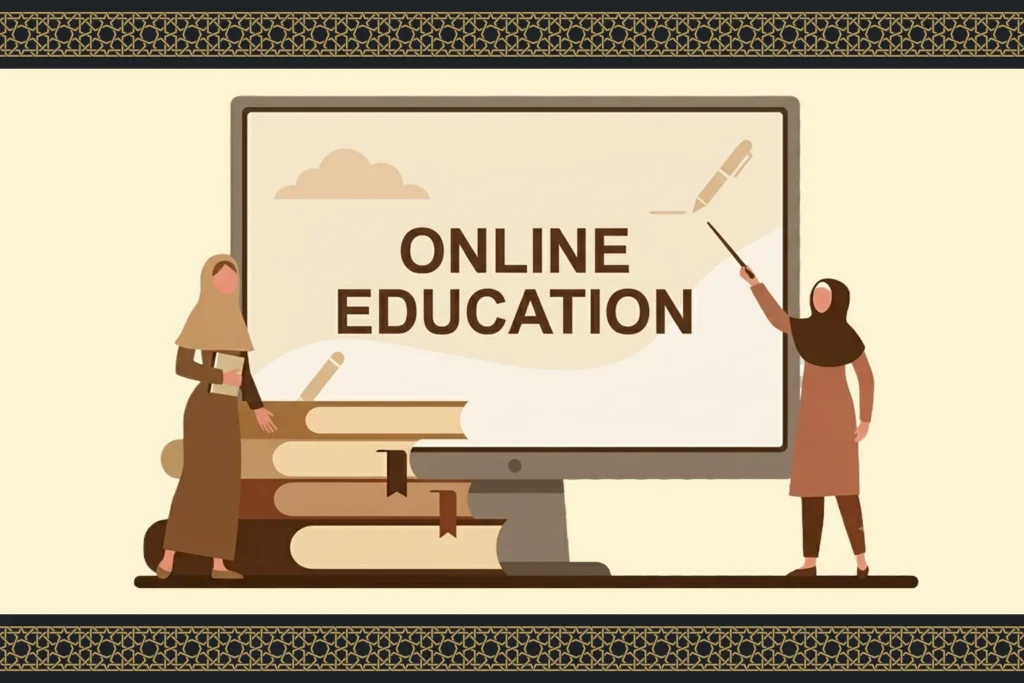
Online Quran classes have made it possible for anyone to learn the Quran from home, at their own pace, with a qualified teacher correcting them in real time. No commute to a masjid, no rigid schedule, no classroom full of children while you’re an adult trying to learn the basics.
This guide walks you through exactly how to learn the Quran online — from your first Arabic letter to confident recitation with Tajweed.
Before You Start: Fix Your Intention
Learning the Quran as an adult is different from learning it as a child. A child’s brain absorbs without resistance. An adult’s brain questions, compares, and sometimes feels embarrassed when a sound won’t come out right.
This is where intention matters. You are not just learning a language — you are building a connection with the One who created you.
The Prophet ﷺ said: “The one who is proficient in the Quran will be with the noble angels, and the one who recites it while struggling receives two rewards.” (Sahih al-Bukhari & Muslim)
One reward for the recitation. A second reward for the struggle. Allah does not demand perfection — He rewards sincerity and persistence.
When frustration hits (and it will), remind yourself why you started. That shift in mindset turns a difficult study session into an act of worship.
Step 1: Start With Noorani Qaida
Every Quran learning journey begins with Noorani Qaida — the foundational book that teaches Arabic letters, pronunciation, and basic reading rules.
Noorani Qaida is not “just for kids.” It is the blueprint of the Quran. It teaches you:
- The 28 Arabic letters and how each one sounds
- Makharij (articulation points) — where each sound originates in the throat, tongue, or lips
- Harakaat (vowel marks) — the short sounds that bring letters to life
- Letter connections — how letters change shape when joined in a word
If you spend a month mastering this foundation, you’ve built something that supports you for the rest of your life. Rush through it, and every step after becomes harder.
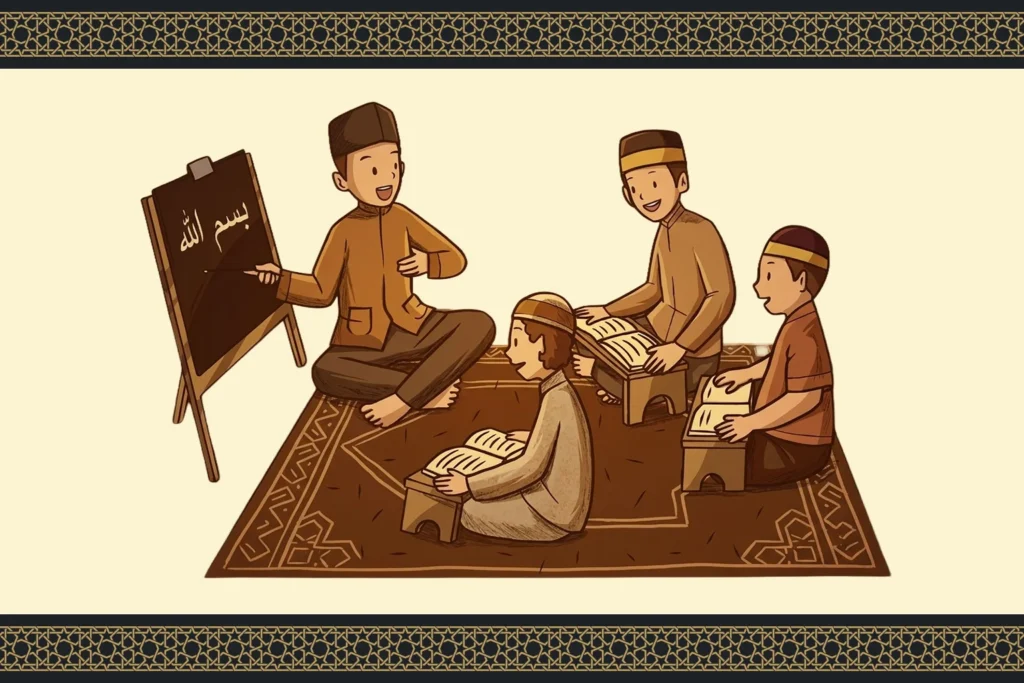
How it works online: Your teacher shares the Qaida on screen during a live 1-on-1 session. You read aloud, they correct your pronunciation immediately. No guessing, no bad habits forming.
→ Learn more about our Noorani Qaida course
Step 2: Learn to Read the Quran
Once you complete the Qaida, you can read Arabic — but the Quran requires more precision than ordinary Arabic text. This is where structured Quran reading practice begins.
Start with the short Surahs in Juz Amma (the 30th part of the Quran). Surahs like Al-Ikhlas, Al-Falaq, An-Naas, and Al-Kawthar are short enough to finish in a few days, which gives your brain a sense of progress and keeps motivation high.
What to focus on while reading:
- Pronouncing each letter from its correct articulation point
- Applying the basic Tajweed rules you learned in Qaida
- Reading with flow — not letter-by-letter, but word-by-word, then phrase-by-phrase
As your reading improves, your teacher will move you to longer passages and eventually full Surahs from the beginning of the Quran.
→ See the full Quran Reading course
Step 3: Learn Tajweed Rules
Tajweed is the science of reciting the Quran exactly as it was revealed — with precise pronunciation, correct elongation, and proper pauses.
The word “Tajweed” comes from the Arabic root meaning “to beautify.” But it’s not decoration — it’s protection. Arabic is a sensitive language where a slight change in vowel length or letter weight can change the meaning of a word entirely. The difference between “qalb” (heart) and “kalb” (dog) is just the depth of the first letter.
The core Tajweed rules you’ll learn:
- Makharij al-Huruf — the 17 articulation points for all Arabic letters
- Sifaat — the characteristics of each letter (heavy, light, bouncing, flowing)
- Noon Sakinah & Tanween rules — Izhar, Idgham, Iqlab, Ikhfa
- Meem Sakinah rules — Izhar Shafawi, Ikhfa Shafawi, Idgham Shafawi
- Madd (elongation) — when and how long to stretch a vowel sound
- Waqf (stopping rules) — where to pause and where to continue
Why you need a teacher for Tajweed: You cannot hear your own mistakes. A qualified teacher listens to your recitation live and catches errors the moment they happen — before they become habits.
→ Explore the Tajweed ul Quran course
Step 4: Build Consistent Daily Practice
The greatest enemy of Quran learning is the “all-or-nothing” mentality — waiting for a free weekend or a holiday that never comes.
The Prophet ﷺ said: “The most beloved deeds to Allah are those done consistently, even if they are small.” (Sahih al-Bukhari)
The 15-minute rule: Instead of aiming for an hour and skipping most days, do 15 minutes every single day. Attach it to a habit you already have — after Fajr prayer, during your morning coffee, or before bed.
Practical habits that accelerate learning:
- Listen to reciters daily. Play Mishary Rashid Alafasy or Abdul Basit while driving or cooking. Your ear learns the rhythm and pronunciation even passively.
- Use the “shadowing” technique. Listen to one verse, pause, and repeat it — matching the reciter’s pronunciation, elongation, and pauses exactly.
- Write out verses by hand. The connection between hand and brain strengthens memorization more than reading alone.
- Recite what you learn in Salah. When you use a new Surah or apply a Tajweed rule in prayer, the knowledge moves from your notebook into your worship.
Small daily effort beats irregular long sessions every time.
How Online Quran Classes Work
If you’ve never taken an online Quran class, here’s what a typical session looks like:
- You join a live 1-on-1 video call with your teacher at your scheduled time (Zoom, Skype, or the academy’s own platform)
- Your teacher shares the lesson on screen — Qaida page, Quran page, or Tajweed material
- You read aloud while your teacher listens carefully
- Your teacher corrects you in real time — pronunciation, Tajweed, fluency
- You receive a practice assignment for the next session
Classes typically run 30–60 minutes, 2–5 times per week depending on your schedule. Everything is recorded so you can review if needed.
Why online works better than self-study:
- A teacher catches pronunciation mistakes before they become permanent habits
- Structured progression means you move from Qaida → Reading → Tajweed → Hifz logically
- Accountability — a scheduled class keeps you consistent in a way YouTube videos never will
- Female teachers available for sisters who prefer learning from a woman
Why online works for busy adults:
- No commute — learn from your living room, office, or hotel room while traveling
- Flexible scheduling — morning, evening, or weekend slots
- Learn at your own pace — no pressure to keep up with a classroom
Common Fears That Stop People (And Why They Shouldn’t)
“I’m too old to learn.” Adults often learn with more discipline and motivation than children. Your life experience actually helps — you understand why you’re learning, which children rarely do. We teach students in their 40s, 50s, and beyond.
“I’ll make mistakes and it’s sinful.” This is a common misconception. Scholars agree that mistakes made by a student who is actively learning are forgiven. Allah says: “So fear Allah as much as you are able” (64:16). The only wrong approach is leaving the Quran untouched. Every mistake is simply a signpost showing you where to practice next.
“My pronunciation is terrible.” That’s exactly why you need a teacher. Arabic has sounds that don’t exist in English — the deep “Haa” (ح), the heavy “Dhad” (ض), the throaty “Ain” (ع). These feel strange at first for every non-Arabic speaker. With guided repetition, your tongue learns the positions. It’s muscle memory, and it comes with time.
“I don’t have enough time.” You have 15 minutes. That’s enough. Two classes per week plus daily practice is enough to make real, measurable progress within months.
What Comes After: Your Learning Path
Once you can read the Quran with basic Tajweed, several paths open up depending on your goals:
| Your Goal | Next Step |
|---|---|
| Read the entire Quran fluently | Quran Reading course — work through all 30 Juz with teacher guidance |
| Perfect your recitation | Tajweed ul Quran course — master all Tajweed rules in depth |
| Memorize the Quran (Hifz) | Hifz Quran course — structured memorization with daily revision |
| Understand what you’re reading | Quran Tafseer course — study the meaning and context of each Surah |
| Get certified (Ijazah) | Quran Ijazah course — receive an authenticated chain of recitation |
You don’t have to choose now. Start with reading and Tajweed. The path reveals itself as you progress.
Start With a Free Trial Class
The best way to know if online Quran learning works for you is to try it.
In a free trial class, you’ll:
- Meet your teacher face-to-face over video
- Get assessed on your current reading level (no judgment — we teach absolute beginners daily)
- See exactly how a live lesson works
- Receive an honest recommendation for which course to start with
No credit card. No commitment. Just a conversation with a qualified Quran teacher who wants to help you start.
Book Your Free Trial →
FAQs
How do I start learning the Quran online? Start with a Noorani Qaida course to learn Arabic letters and pronunciation, then progress to Quran reading and Tajweed. A qualified online teacher guides you through each step in live 1-on-1 sessions.
Can I learn the Quran online as a complete beginner? Yes. Online Quran classes are designed for absolute beginners. You start from the Arabic alphabet and build up gradually — no prior knowledge required.
How long does it take to learn to read the Quran? Most beginners who practice consistently can complete Noorani Qaida in 2–4 months and begin reading the Quran within 6–12 months. The timeline depends on how often you practice and attend classes.
Is online Quran learning as effective as in-person? Yes — in many cases more effective. Online classes are 1-on-1, meaning you get 100% of the teacher’s attention. In a physical classroom, one teacher is shared among 10–20 students.
Do I need to know Arabic before starting? No. The course begins with Arabic letters and sounds. You learn Arabic reading as part of the Quran learning process, not as a separate prerequisite.
Can women learn with female Quran teachers? Yes. Female teachers are available for sisters who prefer learning from a woman. Learn more about our female teachers →
What equipment do I need? A smartphone, tablet, or computer with a camera and microphone, plus a stable internet connection. That’s it.
How much do online Quran classes cost? Plans start from affordable monthly rates with no long-term contracts. See our full pricing →