





Register Now
Fill out this form to get a quote within 24 hours.


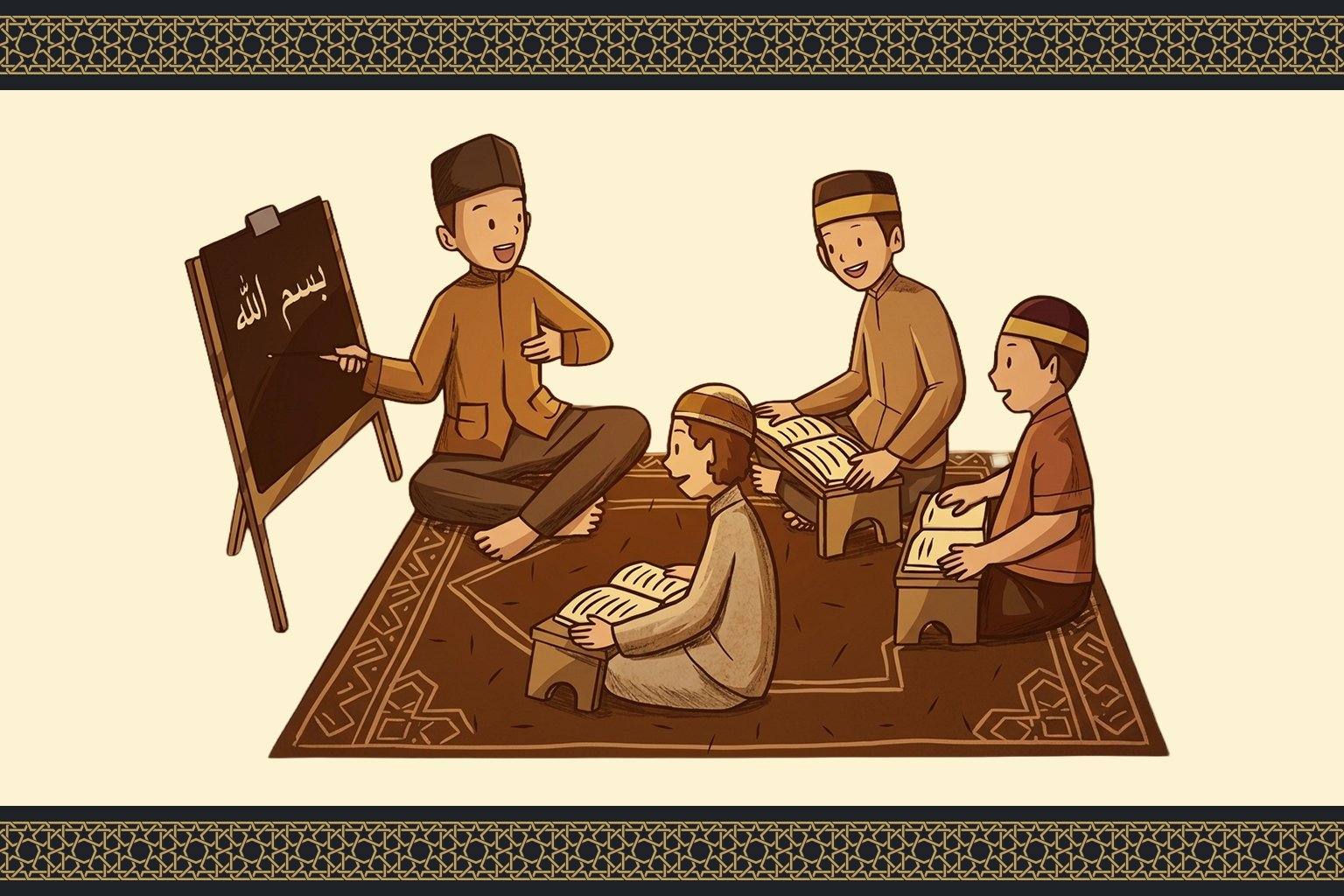
Have you ever wondered why we pray, how Allah created this universe, or what important lessons the Prophets taught us? Learning about Islam is like starting an exciting journey full of knowledge, faith, and beautiful values.
Islamic studies for kids is the perfect way to discover the core beliefs, beautiful practices, and kind teachings of Islam. Through stories, fun games, and simple daily routines, kids can learn everything about the Five Pillars of Islam, the inspiring life of Prophet Muhammad (S.A.W.), and everyday Duas in an easy and enjoyable way.
Some people think religion is only about rules, but that is not true! Islam teaches us how to live our lives in the best possible way. Allah asks us to stay away from haram (forbidden) things because they can harm us or others. When we avoid sins, our hearts remain clean, pure, and happy.
By following the footsteps of our beloved Prophet (S.A.W), we can earn the love of Allah and the people around us. The Prophet always showed kindness, honesty, and love to everyone.
Learning Islamic lessons for kids at an early age is like planting a seed in fertile soil. When they learn the primary beliefs today, their faith grows strong, like a beautiful tree with deep roots. This will help your children to understand who they are as Muslims and give them confidence in their identity.
Whether through school or online Islamic classes for kids, learning these topics helps your kid build a strong foundation for life.
Before looking at what a muslim does, it is essential to understand what a Muslim truly believes in their heart. In Islam, there are six main beliefs known as the Pillars of Iman that every Muslim should know.
Faith in Allah means believing that Allah is the Creator of everything in this world and the One who takes care of all His creation. Muslims believe that Allah is One, has no partner, and no one is equal to Him. He created the sky, the earth, the mountains, the rivers, the animals, and every human being. Allah is Most Kind, Most Merciful, and He always knows what is in our hearts.
We cannot see Allah, but we can feel His blessings all around us every day. When we pray, ask for help, or thank Him, we become closer to Him. Believing in Allah also teaches us to be honest, kind, patient, and helpful to others because Allah loves good character.
No matter where we are or what problems we face, Muslims believe that Allah is always with them and listening to their prayers.
Belief in angels is the second pillar of faith. Angels are special servants of Allah who obey Him and never disobey His commands. Unlike humans and Jinns, they don’t have free will and are completely sinless.
Angels are created from Divine light (Noor). They don’t have any share in the authority of Allah. So, worshipping them and seeking their help is considered as shirk, which is an unforgivable sin in Islam.
Another aspect of Muslim belief about angels is their special service to messengers. The Battle of Badr is a worth-quoting example in which Allah saved Muslims from defeat by sending a thousand angels.
The Holy Quran says: “Surely! I will assist you with a thousand of angels, ranks on ranks.”
Angel’s submission to Allah can be judged from the fact that they even do Sajdah before Adam (R.A), when they were commanded to do so: “And behold! We said to the angels, “Bow down to Adam,” and they bowed down.
Faith in the Sacred Books means believing that Allah sent holy books to guide people toward the right path. These books were revealed to different Prophets so they could teach people how to live righteous lives.
Among these holy books are the
Muslims respect all of these books because they were originally sent by Allah.
The final and most complete holy book is the Holy Quran, which was revealed to Prophet Muhammad (S.A.W). The Quran teaches Muslims about faith, kindness, patience, worship, and how to treat others with respect. It is a source of guidance and comfort for people all over the world.
The Quran is the only book that has remained protected and unchanged since it was revealed, and it continues to guide people in every part of life. Reading the Quran helps muslims become better people, and it reminds us to follow the teachings of Allah every day.
Allah conveys His message to humanity through chosen messengers. These messengers are selected by Allah to guide people and convey his commands. In this way, the messengers act as a link between Allah and human beings by delivering His message clearly and correctly.
Allah didn’t send the messengers to every single individual, nor did He ‘open the skies’ for people to receive revelation themselves. Instead, his commands come through Prophets and Messengers.
These Messengers receive Allah’s revelation through angels, especially Angel Jibreel (Gabriel), and then they share it with their Ummah so that people can follow the right path.
Allah chose human beings as Prophets, not angels, so that they could serve as practical role models for others in daily life.
Faith in the Day of Judgment means believing that one day every person will stand before Allah and answer for the actions they did in this life. Muslims believe that this world is temporary and life after death is real and permanent. Allah will bring everyone back to life for judgment on the Day of Judgment.
On that day, every good and bad deed, even the smallest one, will be known. People who tried to obey Allah, helped others, spoke kindly, and lived honest lives will be rewarded for their good deeds.
Those who did wrong and refused to follow the truth will also be held accountable for their actions. Believing in the Day of Judgment reminds Muslims to be careful about how they treat others and encourages them to do good in everyday life. It also gives hope that justice will be done fairly by Allah, because He knows everything that is hidden in our hearts and minds.
Note: Reciting Surah Al-Mulk after Isha prayer helps protect from the punishment of the grave.
It means believing that everything happens according to Allah’s knowledge and perfect plan. Allah knows everything that has happened in the past, is happening now, and will happen in the future. Nothing happens without His permission and wisdom.
Sometimes people experience happy moments, and sometimes they may face difficulties or sadness. Islam teaches that both good and hard times are part of Allah’s plan, and He always knows what is best for His creation.
Believing in predestination helps Muslims stay patient during difficult situations and thankful during times of happiness. It also teaches us to trust Allah completely because He is the most wise and most merciful. Even though Allah knows our future, people are still responsible for the choices they make and should always try to do good deeds and follow the right path.
The Five Pillars of Islam are the five basic acts of worship that every Muslim tries to follow in daily life. These pillars are very important because they help Muslims stay connected to Allah and live as good and righteous people.
Just like strong pillars support a house and keep it standing, the Five Pillars support a Muslim’s faith and make it stronger. They teach Muslims how to pray, help the needy and care for the poor, and remember Allah in every part of life.
Every Muslim learns about these pillars because they are the foundation of Islam and a guide toward kindness, discipline, honesty, and obedience to Allah.
Tawhid means Allah is the only One worthy of worship and that no one is equal to Him. It is the most important belief in Islam and the foundation of a Muslim’s faith. Allah alone has created the heavens, the earth, and everything in the universe.
He has no partner, no children, and no one shares His power or authority. Muslims believe in Allah as the One true God, and they also believe that Prophet Muhammad (S.A.W) was the last Prophet sent by Allah to guide people toward the right path.
Prophet Muhammad (S.A.W) taught us how to worship Allah, live honestly, and treat others with kindness and respect. By accepting Tawhid, Muslims strengthen their relationship with Allah and learn to trust Him in every part of life.
Salah is the daily prayer that Muslims offer to remember Allah and stay connected to Him throughout the day. Muslims pray five times every day at special times, starting from early morning until night.
During prayer, Muslims face the holy city of Mecca and speak words of worship, praise, and gratitude to Allah. In many languages such as Urdu, Persian, and Turkish, Salah is also called Namaz.
Prayer gives peace to the heart and helps Muslims feel closer to Allah no matter where they are. It teaches discipline, patience, cleanliness, and respect for time. Through Salah, Muslims ask Allah for guidance, forgiveness, and help in their daily lives. It is a beautiful way to thank Allah for His blessings and remember Him regularly every single day.
Zakah is one of the important pillars of Islam that teaches Muslims to care for people who are poor or in need. Muslims who have enough savings are required to give a small part of their wealth, usually 2.5%, to help others.
Zakah is not just about giving money; it is also about showing kindness, generosity, and responsibility toward society. It helps poor families buy food, clothes, medicine, and other important things they may need in daily life.
This reminds Muslims that all wealth is a blessing from Allah and should be shared with those who are struggling. By giving Zakah, Muslims learn not to become selfish or greedy, and instead develop love and compassion for others. This act of charity also helps create a stronger and more caring community where people support one another in times of need.
Sawm means fasting during the holy month of Ramadan, which is the ninth month of the Islamic calendar. During this special month, healthy Muslims do not eat or drink from dawn until sunset.
Fasting teaches Muslims patience, self-control, and gratitude for the blessings Allah has given them. It also helps people understand the struggles of those who do not always have enough food or water.
Ramadan is a time when Muslims pray more, read the Quran, help others, and try to improve their behavior. Families often gather together for Suhoor before sunrise and for Iftar in the evening to break their fast.
At the end of Ramadan, Muslims celebrate the joyful occasion of Eid al-Fitr. On this day, people wear new clothes, attend special prayers at the mosque, visit relatives, share delicious food, and spend happy moments with family and friends.
Hajj is the special pilgrimage to the holy city of Mecca that every Muslim hopes to perform at least once in their lifetime. It is one of the five important pillars of Islam and becomes necessary only for Muslims who are healthy and financially able to travel.
During Hajj, millions of Muslims from different countries gather together to worship Allah and follow the traditions taught by Prophet Ibrahim (A.S) and Prophet Muhammad (S.A.W). Pilgrims wear simple clothes to show equality, because in front of Allah all people are the same regardless of their wealth, race, or status.
Hajj teaches Muslims patience, unity, humility, and obedience to Allah. It is a deeply spiritual journey that strengthens faith and brings Muslims closer to their Creator. Islam also teaches kindness and understanding, so if a person cannot perform Hajj because of illness, old age, or lack of money, Allah does not place any burden on them.
If you join online Islamic studies for kids, your journey is broken down into five super-interesting sections:
Course Section | What You Will Explore |
Quran Studies | Quran Studies is one of the most important parts of Islamic learning. It helps Muslims build a strong connection with Allah by learning His words with love, respect, and understanding. Students first learn how to read the Quran correctly and beautifully by following the rules of Tajweed. Tajweed teaches the proper pronunciation of every Arabic letter, helping the recitation sound clear, soft, and pleasant. Along with recitation, students also memorize short Surahs from the Quran so they can recite them in daily prayers and remember Allah’s guidance in their everyday lives. |
Hadith | Hadith is an important part of Islamic education because it teaches Muslims about the sayings, actions, and daily habits of Prophet Muhammad (S.A.W.). Through Hadith, students learn how the Prophet (S.A.W) lived his life with kindness, honesty, patience, and mercy. These teachings guide Muslims in matters of worship, behavior, family life, and dealing with others in society. By studying Hadith, students understand the practical way to follow Islam in their daily lives. |
Fiqh | Fiqh is the study of Islamic rules that help us understand how to live our daily life according to Islam. Fiqh teaches us how to perform Salah (prayer) in the correct way, including the right movements, words, and timings. It guides us in other daily matters too, like cleanliness, eating halal food, and behaving in a good manner with others. In short, Fiqh helps Muslims understand what is right and wrong in daily life so they can follow Islam easily and correctly |
Aqidah | The word Aqidah comes from an Arabic root word “ʿaqada (عقد)”, which means to tie, bind, or make something very firm and strong, like a knot that cannot easily be opened. So, Aqidah means a belief that is tightly fixed in the heart and cannot be easily changed. It refers to the strong faith a Muslim holds deep inside about Allah and the teachings of Islam. Aqidah is what a person truly believes and holds onto with full trust. It is not just knowledge, but a firm belief that stays in the heart. |
Islamic History | Islamic History is like taking a journey back in time and learning about the amazing stories of the Prophets, great leaders, and brave people who helped Islam grow. It teaches us how Islam started and how it spread with truth, patience, and struggle. Through Islamic History, we learn about the lives of the Prophets (peace be upon them), their struggles, and how they guided people toward the right path. We also read about inspiring heroes and important events that shaped the Muslim world. These stories are not just for knowledge, they give us lessons about faith, courage, patience, and trust in Allah. |
Taking Islamic lessons for kids is a fun way to grow closer to Allah while learning how to be the best version of yourself. Whether you are looking for a comprehensive program or interactive islamic studies as a beginner, OnlineQuranClassesUSA custom-designed these lessons to make sure learning is never boring! Through games, stories, and caring tutors, we help you build a lifelong love for Islam.
Yes! With our Islamic studies online course for kids, you can log in from the comfort of your home, anywhere in the world, at a time that fits your school schedule.
Not at all! Every lesson is broken down into gentle, age-appropriate steps with plenty of pictures, stories, and encouragement.
